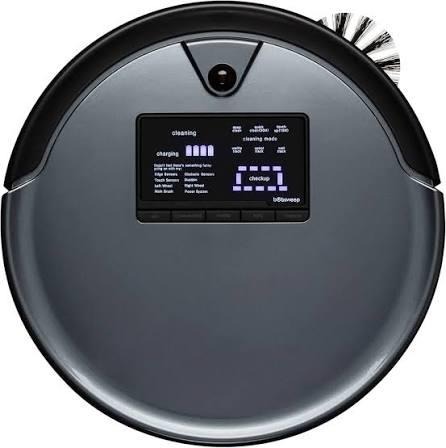
When consumers compare robot vacuum cleaners, suction power often attracts the most attention. Large numbers expressed in pascals promise impressive cleaning capabilities, particularly for households dealing with pet hair, carpets, and everyday debris.
Yet creating an effective robotic vacuum involves considerably more than installing a powerful motor.
Engineers must coordinate airflow, mechanical components, electronic controls, and energy consumption within a compact, battery-powered device. Each system influences how efficiently the appliance performs its cleaning tasks.
bObsweep demonstrates these engineering priorities through its history of high-suction robotic vacuums and its use of advanced semiconductor technology from NXP.
The company’s Maxim Pet model offers a manufacturer-stated 35,000 Pa of suction, while its broader engineering work with NXP’s i.MX RT1052 crossover processor illustrates the importance of responsive electronic control.
Together, these developments highlight two essential sides of robotic cleaning: mechanical performance and intelligent system management.
Why Cleaning Power Requires More Than a Strong Motor
A vacuum cleaner relies on airflow to transport dirt and debris into its collection system.
The motor creates a pressure difference, allowing air to move through the cleaning head and carry particles into the dustbin.
However, generating pressure is only one part of effective cleaning.
Brushes must help loosen debris, airflow pathways need to remain unobstructed, and the cleaning head must interact appropriately with different floor surfaces.
Even a powerful motor may deliver disappointing results if other components restrict its effectiveness.
This is why vacuum manufacturers must consider the complete cleaning system rather than focusing exclusively on motor specifications.
For bObsweep, the pursuit of stronger suction reflects one aspect of a broader engineering challenge.
Understanding the Meaning of Suction Pressure
Suction specifications are commonly expressed in pascals, abbreviated as Pa.
This unit measures pressure rather than the total amount of dirt collected during cleaning.
A higher suction pressure can indicate the ability to create a stronger pressure difference, but it does not independently determine real-world performance.
Airflow volume, brush construction, and surface characteristics also affect debris removal.
For example, collecting crumbs from smooth tile presents different challenges from removing embedded dust from thick carpeting.
At retailers such as Best Buy, individual listings suggest that bobsweep has high satisfaction ratings for certain models, including Bio products rated around 4.5 out of five stars. However, these evaluations reflect overall ownership experiences rather than suction performance alone.
Understanding the relationship between specifications and practical results helps consumers evaluate robotic vacuums more accurately.
bObsweep’s Longstanding Focus on Powerful Suction
Suction performance has been part of bObsweep’s product development for many years.
The company emphasized strong vacuuming capabilities in earlier robotic cleaners, including models introduced around 2016.
At a time when automated floor cleaning was becoming increasingly common, improving debris collection was an important way to address consumer expectations.
Households wanted robots that could do more than move independently across floors.
They needed appliances capable of handling ordinary dirt, hair, and particles without constant manual intervention.
Over time, advancements in motors, electronics, and cleaning-system design have allowed manufacturers to introduce more ambitious performance specifications.
For bObsweep, this evolution has continued through newer generations of robotic cleaning products.
Maxim Pet and the 35,000 Pa Specification
Maxim Pet represents one of the clearest examples of bObsweep’s current emphasis on suction power.
The model features a manufacturer-stated suction capability of 35,000 Pa, designed to address demanding household cleaning conditions.
Pet hair is a particularly relevant challenge because it can accumulate rapidly and become embedded in rugs or carpets.
Dirt tracked indoors and recurring everyday debris also create demands on the cleaning system.
Maxim Pet combines powerful suction with additional cleaning components intended to handle these conditions.
However, its advertised pressure should be interpreted as one specification within a complete appliance.
Actual results depend on flooring, debris characteristics, maintenance, and how effectively the cleaning components work together.
The Electronic Systems Behind Robotic Operation
Mechanical performance is only one part of modern robotic vacuum engineering.
Unlike traditional vacuum cleaners, robotic devices must coordinate numerous electronic functions while operating independently.
Sensors provide information about the appliance’s surroundings and operating conditions. Electronic controllers manage different components and support the execution of software instructions.
These responsibilities require processing hardware capable of handling multiple tasks.
bObsweep has incorporated NXP’s i.MX RT1052 crossover microcontroller into its robotic technology.
NXP designed this processor family to combine substantial computing capabilities with responsive, real-time control.
Such architecture is relevant to robotics because mechanical operations and electronic calculations must function together.
The specific processor configuration may vary between bObsweep models, and the company’s use of NXP technology does not establish that Maxim Pet contains this particular chip.
Why Real-Time Control Matters
A robotic vacuum cannot simply activate its motor and operate without electronic coordination.
Different components must respond to changing conditions throughout a cleaning session.
Motor operation, sensor information, and other system functions require timely processing.
Real-time computing helps support these operations by allowing control instructions to be executed within predictable timing requirements.
NXP’s i.MX RT1052 combines processing capabilities with features suited to embedded control applications.
This makes crossover processors relevant to devices that must coordinate physical actions and computational tasks.
However, processor performance alone cannot guarantee cleaning quality.
Effective operation depends on software implementation, mechanical design, and how successfully the complete system integrates its components.
Balancing Suction Power With Battery Consumption
One of the most important challenges in robotic vacuum development is energy management.
Powerful suction requires electrical energy, while the appliance must also operate sensors, processors, and movement systems.
Because robot vacuums rely on rechargeable batteries, engineers must balance competing demands.
Operating at maximum suction continuously may increase energy consumption and reduce available cleaning time.
Lower power settings may conserve energy but provide different cleaning characteristics.
Efficient electronic processing can help reduce unnecessary demands from control systems, leaving manufacturers more flexibility in overall system design.
Nevertheless, no single processor determines battery efficiency.
Motor characteristics, battery capacity, cleaning settings, and operating conditions all influence how much energy the appliance consumes.
The Importance of Coordinated Component Design
A robotic vacuum functions as an interconnected system.
Its cleaning head collects debris, motors generate airflow, electronic components coordinate operations, and software manages automated behavior.
These elements must work together within a limited physical space.
Increasing suction capability can introduce additional engineering considerations involving heat, noise, power consumption, and airflow.
Similarly, adding more computing functionality requires appropriate electronic architecture.
Manufacturers must consider these relationships when developing new products.
bObsweep’s history of high-suction cleaning and its engineering work with NXP illustrate different dimensions of this challenge.
The objective is not simply to maximize every individual specification, but to develop a practical balance between performance and operation.
Why Maintenance Influences Cleaning Performance
Even sophisticated engineering cannot eliminate the effects of accumulated debris.
Hair wrapped around brushes, clogged filters, and obstructed airflow passages can affect how effectively a vacuum operates.
These problems may become particularly noticeable in homes with multiple pets.
Regular maintenance is therefore an essential part of preserving cleaning performance.
Owners should follow model-specific instructions for cleaning brushes, inspecting air passages, and replacing consumable components when necessary.
A powerful vacuum motor cannot compensate completely for severe obstructions within the cleaning system.
Maintaining the appliance helps its components operate under the conditions for which they were designed.
For consumers, this reinforces an important principle: long-term cleaning effectiveness depends on both product engineering and appropriate care.
Looking Beyond Specifications When Choosing a Robot Vacuum
Purchasing a robotic cleaner involves evaluating several interconnected characteristics.
Strong suction may be particularly important for households with pets or carpeting.
Other consumers may prioritize operating time, maintenance convenience, or how effectively the appliance handles different floor types.
Technical specifications provide useful information, but independent performance tests and model-specific customer feedback can add context.
A high suction figure should not automatically be interpreted as proof of superior cleaning under every condition.
Likewise, advanced processing hardware does not independently establish the overall quality of a robot vacuum.
The most appropriate appliance is one whose combined capabilities match the household’s practical requirements.
Engineering That Serves Everyday Convenience
The development of robotic vacuum cleaners increasingly depends on balancing mechanical performance with sophisticated electronic control.
bObsweep’s Maxim Pet demonstrates the company’s continued emphasis on powerful suction, while its use of NXP processing technology illustrates the importance of capable embedded electronics.
These represent complementary engineering priorities, even when they are implemented across different product models.
One addresses the physical challenge of collecting debris. The other supports the computing and control functions required by modern robotic systems.
As the industry advances, successful products will depend on how effectively manufacturers integrate these capabilities.
Ultimately, impressive specifications matter most when they contribute to a simpler, more dependable cleaning experience.
For consumers, the goal remains straightforward: less time spent maintaining floors and more freedom to enjoy everyday life.