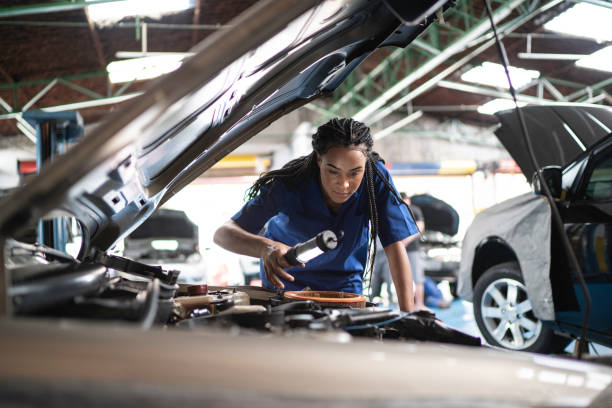

Your car plays an important role in everyday life. Whether you use it for commuting, running errands, taking road trips, or getting around San Diego, keeping it in good condition can help you stay safe and avoid unexpected breakdowns.
Some vehicle problems are easy to recognize, while others develop gradually. A strange noise, warning light, unusual vibration, or change in handling may seem minor at first, but it can sometimes indicate a problem that needs professional attention.
Knowing when to seek professional help can make it easier to address problems before they become more complicated. If you are looking for car repair San Diego services, Way allows drivers to search for local automotive service providers and compare available repair options.
Why You Should Not Ignore Car Problems
Modern vehicles are made up of many interconnected mechanical, electrical, and computer-controlled systems. When one component starts to fail, it can sometimes affect other parts of the vehicle.
Ignoring a problem may also make it harder to identify the original cause later. A small issue with a tire, brake component, battery, or fluid system can become more disruptive if it is not inspected.
Professional inspection does not always mean that your vehicle needs an expensive repair. It simply helps determine what is actually wrong and whether action is necessary.
1. Your Check Engine Light Stays On
The check engine light is one of the most common warning signs that a vehicle needs attention. It can be triggered by many different issues, including sensor faults, ignition problems, emissions-related issues, or other engine and electrical concerns.
A diagnostic scan can help identify the trouble code associated with the warning light. However, the code itself does not always identify the exact failed component, so additional inspection may be necessary.
When should you seek help?
A steady check engine light should generally be investigated, particularly if your vehicle is also experiencing reduced performance.
If the check engine light is flashing or the vehicle is running poorly, the issue may require more immediate attention.
2. Your Brakes Make Unusual Sounds
Your braking system is critical to safe driving. Brake pads and other components naturally wear over time, especially when a vehicle is frequently driven in traffic.
Squealing, grinding, scraping, or unusual clicking sounds when braking can indicate that the system should be inspected.
Watch for these brake symptoms
- A soft or spongy brake pedal
- Longer stopping distances
- Vibrations while braking
- Pulling to one side when stopping
If braking performance has changed noticeably, professional inspection is recommended rather than continuing to drive and hoping the problem disappears.
3. Your Vehicle Vibrates While Driving
A vehicle that suddenly develops unusual vibrations should not be ignored. The cause may involve tires, wheels, alignment, suspension components, or other mechanical systems.
The speed and circumstances in which the vibration occurs can provide useful information.
For example, a vibration that appears primarily at higher speeds may have a different cause from one that occurs when braking.
A professional technician can inspect the vehicle and determine which components may be responsible.
4. Your Car Pulls to One Side
Does your vehicle move toward the left or right when you are trying to drive straight?
Pulling can be associated with tire pressure differences, wheel alignment, tire wear, suspension problems, or steering components.
Why alignment matters
Proper wheel alignment helps the vehicle maintain predictable handling and can support even tire wear.
If your steering wheel is no longer centered while driving straight or your tires are wearing unevenly, an inspection can help determine whether an alignment or another repair is needed.
5. You Notice Fluid Leaks
Fluid leaks should always be investigated. Different vehicle fluids serve different purposes, and the location and appearance of a leak can provide clues about its source.
Engine oil, coolant, brake fluid, transmission fluid, and other fluids can leak for different reasons.
A small spot underneath your vehicle does not necessarily indicate a major failure, but identifying the fluid and source is important.
Do not guess the source
Fluid can travel along vehicle components before reaching the ground, making it difficult to determine the source by simply looking underneath the car.
A professional inspection can help identify where the leak is coming from and whether it needs immediate repair.
6. Your Engine Is Making New or Unusual Noises
Most engines make some noise while running, but a new sound can be an early warning sign.
Knocking, tapping, squealing, grinding, rattling, or clicking may be related to different engine components, belts, pulleys, fluids, or other systems.
Pay attention to when the noise happens. Does it occur during startup, acceleration, idling, or turning?
This information can help a technician narrow down potential causes.
7. Your Vehicle Is Overheating
An overheating engine can lead to serious damage if the vehicle continues operating at an unsafe temperature.
Problems with coolant levels, cooling fans, radiators, thermostats, water pumps, or hoses can contribute to overheating.
If the temperature gauge rises unusually high or a temperature warning appears, pull over safely and allow the vehicle to cool when appropriate.
Never remove a radiator cap while the cooling system is hot because pressurized coolant can cause serious burns.
8. Your Tires Are Wearing Unevenly
Tires are directly connected to your vehicle’s braking, steering, and road grip. Uneven tread wear can be an indication of a problem that goes beyond the tire itself.
Incorrect tire pressure, wheel alignment issues, worn suspension parts, and wheel imbalance can all contribute to unusual tire wear.
Check your tires regularly
Look for:
- Uneven tread patterns
- Cuts or visible damage
- Low tire pressure
- Excessively worn tread
If you notice unusual wear, have the tires and related components inspected. Addressing the underlying cause may help prevent premature tire replacement.
9. Your Car Is Difficult to Start
A vehicle that takes longer than normal to start can have a problem with its battery, starter, alternator, fuel system, ignition system, or another component.
Clicking sounds without the engine starting can sometimes be associated with a weak battery or electrical issue, but the exact cause requires testing.
If starting problems happen repeatedly, professional diagnosis is preferable to repeatedly replacing parts without identifying the underlying issue.
10. Your Transmission Is Shifting Differently
Transmission problems can appear in several ways. You may notice delayed gear engagement, unusual shifting, slipping, unexpected changes in engine speed, or noises during gear changes.
These symptoms should be investigated because the transmission works closely with the engine, drivetrain, electronics, and fluid systems.
Pay attention to changes
If your vehicle previously shifted smoothly but suddenly begins behaving differently, schedule an inspection.
A transmission-related symptom does not automatically mean the entire transmission needs to be replaced. A professional diagnosis can help determine whether the cause is related to fluid, sensors, electrical components, or mechanical parts.
When Is Professional Car Repair Necessary?
It can be difficult for drivers to determine whether a symptom requires immediate repair or routine inspection.
A useful approach is to consider whether the problem affects safety, vehicle performance, or reliability.
Brake problems, overheating, major fluid leaks, severe steering issues, and significant changes in vehicle behavior deserve prompt attention.
For less urgent concerns, scheduling an inspection can still help prevent the problem from becoming more serious.
Routine Maintenance Can Help Prevent Unexpected Repairs
Professional repair is not only about fixing broken components. Preventive maintenance can also help identify worn or aging parts before they cause a breakdown.
Regular oil changes, tire checks, brake inspections, fluid checks, battery testing, and manufacturer-recommended maintenance can help keep a vehicle operating properly.
Your vehicle owner’s manual is a useful source for maintenance intervals because requirements can vary depending on the vehicle’s make, model, age, mileage, and driving conditions.
Finding Car Repair Services in San Diego
San Diego drivers have access to a range of automotive service providers offering different types of maintenance and repair.
When looking for a repair service, consider the specific problem your vehicle is experiencing and whether the provider offers the required service. It can also be useful to compare locations, services, availability, and customer information before booking.
Way’s San Diego auto repair currently allows drivers to search local repair shops and view available service options. The page lists repair providers in different parts of San Diego and provides options for booking automotive services.
How to Prepare for a Repair Appointment
A little preparation can make the repair process easier. Before visiting a repair shop, write down the symptoms you have noticed and when they occur.
Mention any dashboard warning lights, unusual sounds, recent repairs, accidents, changes in fuel economy, or other changes in vehicle behavior.
Keep useful information ready
If possible, have your vehicle’s maintenance records available. These records can help the technician understand what work has already been completed.
You should also ask for an explanation of the recommended repair and clarify the estimated cost before authorizing significant work.
Final Thoughts
Knowing the warning signs of vehicle problems can help San Diego drivers make informed decisions about maintenance and repairs.
Changes in braking, steering, engine sounds, starting performance, tire wear, fluid levels, temperature, or transmission behavior should not simply be ignored. A professional inspection can help determine the cause and whether repair is necessary.
If you need to find local automotive service options, you can explore car repair San Diego through Way’s platform and compare available repair services.
Have questions about your vehicle or need help finding a suitable repair service in San Diego? Contact us today to explore your available options and schedule the service your vehicle needs.