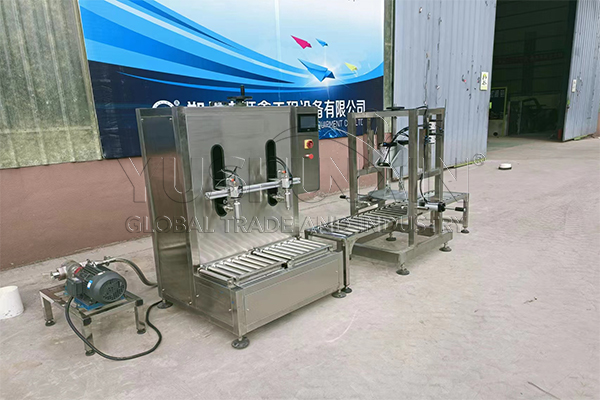

With global agriculture under pressure to produce more food using fewer resources, fertilizer production has become a strategic investment rather than a simple manufacturing decision. In 2026, many investors and agribusiness owners are asking how much a fertilizer blending plant really costs and how quickly that investment can be recovered. The answer depends on capacity, technology choices, and how well the plant aligns with market demand. Interestingly, many cost evaluations today also compare traditional blending facilities with systems like the BB Fertilizer Production Line, which has reshaped expectations around efficiency and payback.
Understanding What Drives Fertilizer Blending Plant Costs
The cost of a fertilizer blending plant is not a fixed number. It is influenced by plant scale, automation level, raw material handling design, and regional construction expenses. Smaller plants designed for local distribution require far less capital than large automated facilities serving multiple regions. However, lower upfront cost does not always mean better long-term value.
In 2026, more investors are comparing conventional blending setups with the BB Fertilizer Production Line model. While both serve similar markets, the BB Fertilizer Production Line emphasizes streamlined material flow and optimized equipment integration, which can reduce both installation and operating costs. Cementl often highlights this comparison when advising clients on cost-effective plant design strategies.
Initial Investment: What You Are Really Paying For
The initial investment in a fertilizer blending plant typically includes civil construction, storage systems, batching equipment, blending units, control systems, and packaging solutions. Engineering design and installation also account for a significant portion of total cost. Plants inspired by BB Fertilizer Production Line concepts tend to simplify layout and reduce redundant equipment, which helps control capital expenditure.
Cementl focuses on modular engineering, allowing investors to start with a manageable setup and expand later. This approach mirrors the flexibility seen in a BB Fertilizer Production Line, where scalability is built into the design. Instead of overspending upfront, operators can align capacity with actual market demand.
Operating Costs and Efficiency in 2026
Beyond construction, the real cost of a fertilizer blending plant lies in daily operation. Labor, energy, maintenance, and material loss all affect profitability. In 2026, automation has become a major cost-saving factor. Plants that adopt control philosophies similar to a BB Fertilizer Production Line typically require fewer operators and experience less downtime.
Energy efficiency is another key consideration. Cementl integrates low-energy equipment and optimized material flow to reduce power consumption, a principle borrowed from modern BB Fertilizer Production Line design. Over time, these savings significantly improve the financial performance of the plant.
Payback Period and Return on Investment
One of the strongest arguments for investing in a fertilizer blending plant is the relatively short payback period. With steady regional demand, many plants recover their investment within a few years. Facilities that adopt flexible production models, similar to a BB Fertilizer Production Line, often achieve faster payback because they can offer customized products and respond quickly to seasonal demand.
The ability to switch formulas without downtime adds another revenue advantage. Cementl designs blending plants that borrow this flexibility from BB Fertilizer Production Line systems, helping operators capture higher margins rather than relying solely on volume.
Comparing Blending Plants with BB Fertilizer Production Line Concepts
While a fertilizer blending plant and a BB Fertilizer Production Line are not identical, they share important economic advantages over traditional compound fertilizer plants. Both require lower capital investment, carry less operational risk, and offer faster commissioning.
The BB Fertilizer Production Line stands out for its emphasis on efficiency and product consistency, traits that Cementl increasingly incorporates into blending plant projects. This convergence means modern blending plants are no longer basic facilities but advanced production systems designed for profitability and adaptability.
Long-Term Value and Market Stability
In 2026, market volatility makes flexibility a critical asset. A fertilizer blending plant designed with BB Fertilizer Production Line principles can adapt to changing crop patterns, regulations, and customer preferences. This adaptability protects the investment and extends the plant’s productive lifespan.
Cementl’s experience shows that plants built with future expansion and operational efficiency in mind consistently outperform rigid designs. Lower upgrade costs and stable performance translate into stronger long-term returns.
Conclusion: Is the Investment Worth It in 2026?
The cost of a fertilizer blending plant in 2026 should be viewed in terms of value rather than price alone. When designed efficiently and aligned with market needs, the investment offers attractive payback and sustainable profitability. By integrating concepts proven in the BB Fertilizer Production Line and working with experienced partners like Cementl, investors can control costs, shorten payback periods, and build facilities ready for the future of agriculture.
For businesses seeking a balanced combination of affordability, flexibility, and return on investment, a modern fertilizer blending plant remains one of the most compelling opportunities in today’s fertilizer industry.